
You’ve got the venue booked, the invites sent, and a rough headcount. Now comes the part that keeps you up at night: figuring out how much catering to order. Too little and you’re the host who ran out of food. Too much and you’ve blown your budget on leftovers nobody wants.
The truth is, most people guess. They round up, cross their fingers, and hope it works out. But catering portions aren’t one-size-fits-all, and that guesswork costs you—either in wasted food or hungry guests.
You don’t need to be a professional event planner to get this right. You just need the formulas that actually work, adjusted for the variables that matter. Let’s break down exactly how much food you need per person, starting with the basics that apply to almost every event.
How Much Food Per Person for Catering Events
The baseline formula is simpler than you think. For most buffet-style catering, plan for about one pound of food per person when you account for everything—proteins, sides, appetizers, and desserts combined. That’s your total food volume.
If you’re doing a plated meal where portions are controlled, you can scale back slightly. But for buffets where guests serve themselves, that one-pound rule keeps you covered. It accounts for the fact that some people eat more, some eat less, and a few will go back for seconds.
Here’s where it gets more specific. Your main protein should be 6-8 ounces per person. Side dishes run about 4-6 ounces each. If you’re serving appetizers before the meal, figure 2-3 pieces per person. For cocktail-style events where apps are the meal, bump that to 6-8 pieces per person per hour.
Catering Portions by Event Type and Duration
Not all events eat the same. A two-hour corporate breakfast meeting requires different planning than an all-day wedding celebration. Event length directly impacts how much your guests will consume, and getting this wrong is one of the most common catering mistakes.
For short events under two hours, your baseline portions usually work. Guests eat once, maybe grab a second helping, and that’s it. But stretch that timeline past two hours and consumption patterns change. People graze. They come back. They treat the buffet like it’s there for the duration, because it is.
This is especially true for casual events where mingling is the focus. Networking lunches, wedding cocktail hours, and family gatherings all see higher consumption than formal sit-down affairs. When guests are standing and socializing, they tend to eat more frequently in smaller amounts throughout the event.
The type of event also signals appetite expectations. A breakfast meeting after a morning commute? People show up hungry. An afternoon corporate training session? Lighter appetites. An evening celebration? Guests expect substantial food, not light refreshments. You’re not just feeding bodies—you’re meeting expectations shaped by timing and context.
Here’s a practical breakdown for event catering. For events under 30 minutes, think light bites or single-serve items. For 1-2 hours, standard portions work. Anything longer than two hours, increase your portions by 15-20% or plan for multiple courses. And if you’re serving alcohol, add another 10% because drinking increases appetite—that’s not a myth, it’s documented behavior.
The service style matters too. Buffets require about 10-15% more food than plated meals because guests take what looks good, not necessarily what they’ll finish. Family-style service falls somewhere in the middle. Plated service gives you the most control and the least waste, but it also requires more staff and higher labor costs.
Don’t forget about the composition of your guest list. Are you feeding athletes after a game? Construction workers on a lunch break? A group of seniors at an afternoon tea? Age, activity level, and even the time of day all influence how much people actually eat. A group of teenage boys will demolish portions that would serve twice as many retirees. That’s not stereotyping—it’s reality that affects your catering calculator.
Catering Calculator: Specific Portions for Common Foods
Let’s get specific with the numbers you can actually use when ordering catering. These are the industry-standard portions that we and other professional caterers in Long Island and NYC rely on, broken down by food type so you can calculate exactly what you need.
For breakfast catering, plan for one bagel per person if bagels are your only option. If you’re offering variety—bagels, muffins, pastries—you can estimate about 1.5 items total per person because not everyone will eat multiples of everything. Cream cheese runs about 1 pound per dozen bagels, which breaks down to roughly 1.33 ounces per bagel. If you’re serving lox for a proper New York-style bagel spread, figure 2 ounces per person minimum, though 3 ounces per person better matches local expectations.
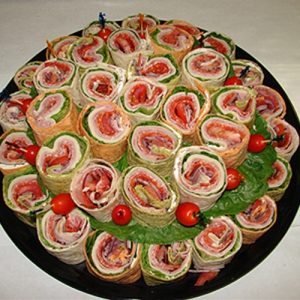
Sandwich platters follow a different logic. For buffet-style sandwich catering, order 12 sandwiches for every 10 people. That accounts for the variety factor—some people want two halves of different sandwiches, others just want one. If you’re doing individually boxed lunches, one sandwich per person is your baseline, but keep 5-10 extra on hand for the inevitably hungry few.
Proteins get their own math, and this is where we often see the biggest waste or shortage issues. For comfort foods like pulled pork or brisket, 4-5 ounces of cooked meat per person is standard. If you’re serving fried chicken, plan on three pieces per guest. For fish, ask your caterer based on your headcount because portion sizes vary significantly by type. Vegetarian mains should be about 6 ounces of cooked food per person, often built around pasta, rice, grains, or legumes.
Side dishes are where people consistently over-order. You don’t need massive quantities of every side. If you’re offering four side options, figure about 4 ounces per side per person—but remember that no one takes a full portion of all four sides. The more variety you offer, the smaller each individual portion becomes because guests sample rather than load up. This is the variety effect, and it’s your friend when planning portions.
Beverages are easy to underestimate, especially for Long Island and NYC events where coffee consumption runs high. For non-alcoholic drinks, plan for 2-3 servings per person for a two-hour event. Coffee drinkers will consume about 1.5 cups each, so one gallon of coffee serves 8-12 people depending on how caffeine-dependent your crowd is. For cold beverages like iced tea or lemonade, one gallon serves about 10 people. If it’s a hot day or an outdoor event, bump those numbers up by 20-30%.
Desserts don’t require massive portions. Plan for 1-2 servings per person, but remember that not everyone eats dessert, especially if they’ve just finished a full meal. If you’re serving cake, one slice per person is standard. For cookies or brownies, cutting them into smaller portions means you can order half as many as your headcount and still have enough for everyone who wants something sweet.
Here’s the variable most people miss when calculating catering portions: dietary restrictions and preferences. About 40% of Americans follow some type of dietary guideline, and nearly 10% avoid gluten or dairy. That doesn’t mean half your menu needs to be specialized, but it does mean you should have clear options. One solid vegetarian choice, one vegan option, and one gluten-free alternative will cover most bases without creating a complicated menu that’s expensive to execute.
Common Catering Mistakes That Cause Food Shortages or Waste
The biggest catering mistake isn’t complicated—it’s trusting your RSVP count without a buffer. People bring unexpected plus-ones. Some guests who said no show up anyway. Others eat more than you anticipated based on average portions.
We always plan for 10-15% more than the confirmed headcount. If you’re expecting 100 guests, order for 110. It’s the insurance policy that prevents the nightmare scenario of running out of food halfway through your event. The cost of a few extra portions is nothing compared to the embarrassment and scrambling that comes with a shortage, especially at Long Island and NYC events where expectations run high.
The second mistake is ignoring how your event’s structure affects consumption. A formal sit-down dinner where courses are timed and controlled requires different planning than a four-hour open buffet. If your buffet is available for more than two hours, you need to account for repeat visits. Guests who grabbed a small plate at the start will come back. That’s not greed—it’s just how people behave when food is continuously available.
How Event Duration and Service Style Change Catering Needs
Event duration isn’t just about the clock—it’s about how many times guests interact with your food. A 30-minute coffee break requires single-serve portions because there’s no time for seconds. A three-hour wedding reception needs enough food to sustain guests through multiple trips to the buffet, and your catering portions need to reflect that reality.
Service style compounds this effect. Buffet-style service creates what the industry calls “the variety effect.” When guests see multiple options, they take smaller portions of more items. That sounds efficient until you realize it means they’re consuming more total volume because they’re sampling everything. Research shows buffet guests consume 10-15% more food than those served plated meals—not because they’re greedier, but because the format encourages variety over volume.
Plated service gives you control. Each guest receives a predetermined portion, and seconds require intentional effort. That’s why plated dinners generate less waste—there’s no opportunity for eyes-bigger-than-stomach syndrome. The downside is higher labor costs because you need more staff to serve and clear plates. For catering in Long Island and NYC where labor costs are already premium, this becomes a budget consideration.
Family-style service sits in the middle. Guests share platters at their tables, which creates a social element but also introduces unpredictability. Some tables will devour everything and want more. Others will barely touch certain dishes. You need to plan for the hungrier tables without creating massive waste at the others, which is why we add 15% to family-style orders.
The timing of your event also signals expectations. Morning events suggest lighter fare. Lunch events imply moderate portions. Evening celebrations mean guests expect substantial food. If you’re hosting a dinner event that starts at 7 PM, your guests are arriving hungry and expecting a real meal, not appetizers masquerading as dinner. Miss that expectation and you’ll hear about it.
Temperature matters more than you’d think when planning catering portions. Hot food at outdoor summer events requires different planning than the same menu served indoors with climate control. Heat suppresses appetite but increases beverage consumption dramatically. Cold weather does the opposite—guests eat more and drink less. A winter event needs heartier portions and warming dishes. A summer event needs lighter options and significantly more cold beverages, sometimes double the standard calculation.
Here’s what we know that most hosts don’t: the first 30 minutes of any buffet sees the highest traffic. Guests who arrive on time hit the food immediately. That initial rush can make your buffet look depleted even when you have adequate total volume. We hold back a portion of each item and replenish after that first wave rather than putting everything out at once. It prevents the appearance of shortage and keeps the presentation fresh throughout your event.
Planning Catering Portions for Long Island and NYC Events
Long Island and NYC events come with specific considerations that affect your catering calculations. The pace is different here. Guests expect quality, variety, and enough food to match the premium they’re paying for venues and services in one of the country’s most expensive markets.
Local preferences matter when you’re calculating portions. In the NYC metro area, bagel catering for breakfast events isn’t just popular—it’s expected. The standard ratio is 1.5 bagels per person when bagels are the primary food, or about 10 whole bagels for every 12 guests if you’re slicing them in half. For corporate breakfast meetings in Manhattan or Long Island office parks, that formula has been tested thousands of times and it works.
Cream cheese portions follow local expectations too. One pound serves a dozen bagels, but if you’re catering to a New York crowd that takes their bagels seriously, consider bumping that to 1.5 pounds per dozen. The same goes for lox—2 ounces per person minimum, but 3 ounces per person if you want to match what locals expect from a proper bagel spread. Skimp on this and people notice.
The diversity of dietary needs in the NYC area is higher than national averages. You’re likely serving guests with specific religious dietary requirements, multiple types of vegetarians and vegans, and people with various food allergies. Planning for 15-20% of your menu to accommodate restrictions isn’t excessive here—it’s realistic. In a group of 50 people in Long Island or NYC, you’ll almost certainly have several people with dietary needs that go beyond “I don’t eat red meat.”
Venue logistics in Long Island and NYC also affect your catering planning. Many venues have limited kitchen access or require caterers to bring their own equipment. That impacts what can be prepared on-site versus delivered ready-to-serve. It also affects timing. Traffic in the NYC area means delivery windows need buffers. Leaving from our Hauppauge location to reach a Manhattan venue means accounting for variables that don’t exist in less congested markets—accidents on the LIE, construction delays, rush hour backups.
Seasonal considerations hit differently here too. Summer events on Long Island often mean outdoor venues near the water. That’s beautiful, but it also means you need to plan for heat, humidity, and the food safety challenges that come with keeping cold items cold and hot items hot in less-than-ideal conditions. Winter events might be indoors, but guests arriving from cold weather expect warming, substantial food—not the light fare that works in temperate climates year-round.
The cultural expectations around food in this market run high. This is a region where people know good food, have strong opinions about it, and won’t hesitate to judge your event by what you serve. That doesn’t mean you need to overspend on catering, but it does mean quality matters as much as quantity. Fresh ingredients, proper preparation, and thoughtful presentation aren’t luxuries here—they’re baseline expectations that affect whether your event is remembered positively.
Waste is also a bigger concern in urban and suburban environments where disposal costs are higher and sustainability is increasingly important to clients. The NYC area generates significant food waste—restaurants and caterers in the region contribute to the 11+ million tons of food waste the industry produces annually. Planning portions that minimize waste isn’t just environmentally responsible; it’s financially smart and increasingly expected by clients who care about their environmental impact and don’t want to see money literally thrown away.
Getting Your Catering Portions Right Without the Stress
Figuring out catering portions doesn’t require a degree in hospitality management. It requires knowing the baseline formulas, understanding the variables that affect your specific event, and planning with a realistic buffer that accounts for the unexpected.
Start with one pound of total food per person for buffets. Adjust based on your event duration—add 15-20% for events over two hours. Factor in your service style—buffets need more than plated meals. Consider your guest demographics—teenagers eat more than seniors, athletes more than office workers. Use the specific portion guides for the foods you’re serving, from bagels to proteins to sides.
Trust the industry standards that professional caterers have refined over thousands of events. And always, always plan for 10-15% more than your confirmed headcount. The goal isn’t perfection. It’s having enough food that no guest goes hungry while avoiding the waste and expense of massive overordering.
When you nail that balance, your event runs smoothly, your guests leave satisfied, and you stay within budget. For Long Island and NYC events where quality and reliability aren’t negotiable, we bring the experience and full-service approach that takes the guesswork out of catering portions—from breakfast bagel spreads to complete event catering with setup, service, and cleanup handled by professionals who’ve done this hundreds of times.