

You’ve probably had a bagel that looked right but tasted like soft bread with a hole in it. Maybe it came from a chain, a grocery store, or even a local shop that calls itself “New York style” without really earning the label. That quiet disappointment is more common than people talk about. The good news is that the difference between a real New York bagel and an impostor isn’t a mystery — it’s a process. And once you know what to look for, you’ll never settle again. Here’s what actually separates the real thing from everything else.
Kettle Cooked Bagels: The One Step That Changes Everything
The single most important thing that separates a New York style bagel from every other kind is what happens before it goes into the oven. Real bagels are boiled — submerged in hot water for 30 to 60 seconds — before they ever see heat. That step is called kettle cooking, and it’s not optional. It’s the whole point.
When raw dough hits boiling water, the starches on the outside gelatinize instantly. That reaction creates a firm, glossy shell around the bagel before baking even begins. Because the crust is already set, the bagel doesn’t puff up the way bread does in the oven. What you get instead is that dense, chewy interior and the crackly, slightly shiny crust that defines a real New York bagel.
Skip the boil, and you’re just making a round roll.
The Water Myth: What’s Actually True About New York’s Tap Water
You’ve almost certainly heard the water argument. The claim is that New York City’s tap water — which is naturally soft, meaning it’s low in calcium and magnesium — is what gives New York bagels their distinctive chew. It’s a compelling story, and there’s a kernel of truth in it: soft water does produce softer, more pliable gluten, which contributes to a chewier texture.
But here’s where it gets interesting. America’s Test Kitchen ran a blind taste test using the same recipe and method with different water sources and found no meaningful difference in the final product. The water story, as satisfying as it is, doesn’t hold up to scrutiny when the technique is controlled for.
What does hold up? The boil. The fermentation time. The shaping.
A proper New York style bagel starts with dough that’s hand-rolled, not machine-formed. After shaping, it goes through slow cold fermentation — typically 12 to 24 hours — which gives the yeast time to generate the complex flavor compounds that make a well-made bagel taste like something. Rushed dough tastes like rushed dough. There’s no shortcut that replicates what time does to fermented bread.
The boiling water itself also contains barley malt, which contributes to the bagel’s signature flavor and helps develop that deep, slightly caramelized crust during baking. After boiling, the bagels go into a high-temperature oven, often on burlap-covered boards dusted with cornmeal. Every step in that sequence exists for a reason.
Pull any one of them out, and the bagel changes. So yes, the regional water is part of the story. But the real reason New York bagels taste the way they do is that the people making them have been doing it the right way — the full way — for generations. The water is a detail. The process is everything.
How to Spot a Real New York Bagel vs. a Fake One
This is the question that matters most if you’re standing in front of a bagel case trying to decide whether the shop you’re in is worth your time. The signs are there if you know what to look for.
Start with the crust. A kettle-cooked bagel has a surface that’s slightly glossy — not shiny like plastic, but with a subtle sheen that comes from the gelatinized starch. It should feel firm when you pick it up, not soft or squishy. If you can compress the crust easily with your fingers, it wasn’t boiled long enough, or it wasn’t boiled at all.
Then there’s the weight. A real New York bagel has substance to it. The original traditional size was around three ounces — dense, tight, and compact. Modern bagels have grown considerably since then, but the density should still be there. If it feels like you’re holding a dinner roll, something went wrong in the process.
The interior tells the full story. Tear it open and look at the crumb. A properly made bagel has a tight, chewy interior — not airy, not full of large holes like a ciabatta. The texture should have resistance when you bite into it, not collapse immediately. That resistance is what makes a bagel satisfying in a way that bread simply isn’t.
You can also look at the menu for signals. Shops that carry bialys and flagels alongside their bagels are typically operating at a different level of craft. These are New York-specific products that require the same attention to process, and a shop that stocks them is usually a shop that takes the whole thing seriously. The same goes for homemade cream cheese — when a bakery is making their own schmear in multiple flavors rather than opening a commercial tub, that’s a meaningful indicator of what they’re doing in the kitchen overall.
One more thing: ask how early they open. A real bagel operation is running before most people are awake. If a shop can’t tell you when their first batch comes out of the oven, that’s worth knowing.
New York Bagel Menu: What We Actually Offer
There’s a version of a bagel shop that exists in the popular imagination — a counter, a few dozen bagels behind glass, maybe a tub of plain cream cheese — and then there’s what a serious bagel operation actually looks like. The two are very different things.
Our full menu goes well beyond the bagel itself. We offer a range of varieties (plain, everything, sesame, poppy, salt, onion, and more), multiple cream cheese flavors made in-house, hot breakfast sandwiches made to order, salads, soups, and a full lunch and dinner menu. The bagel is the anchor, but it’s not the whole story.
What Nassau County Expects From a Real Bagel Shop
Nassau County has a specific relationship with bagels that’s worth understanding if you’re new to the area or if you’ve just never thought about why the bagels here taste different from what you find elsewhere. Long Island’s bagel culture runs deep — it’s tied to the communities that built these towns, the morning rituals of people catching the LIRR into the city, and a general expectation of quality that locals take seriously.
With an average commute of 36 minutes and a culture built around early mornings and efficient routines, Nassau County residents have been stopping at bagel shops before work for generations. That’s not a casual habit — it’s a daily ritual that demands consistency. When you’re getting the same order five mornings a week, you notice immediately if something’s off. That kind of regular, discerning customer base raises the bar for every shop in the county.
What that means practically is that we need to deliver on freshness every single time. Bagels that sat out too long, cream cheese that came from a commercial container, sandwiches assembled without care — these things get noticed and talked about. The community is small enough that reputation travels fast.
Beyond the morning rush, Nassau County’s event and catering culture is significant. With a median household income well above national averages and a strong tradition of hosting — backyard gatherings, corporate breakfasts, family celebrations — there’s consistent demand for catering that goes beyond a standard tray of bagels. The expectation in this market is for food that arrives fresh, is presented well, and can serve a crowd without cutting corners.
Catering Large Events With Authentic New York Style Bagels
We hear this question often, and the honest answer is: yes, we can do it — but it requires real planning and the right infrastructure. There’s a meaningful difference between throwing together a dozen assorted bagels for pickup and executing a full catering spread for 60 or more people with everything arriving fresh, on time, and ready to serve.
For a morning event, the logistics matter more than most people realize. Bagels need to come out of the oven at the right time, be transported correctly, and arrive at your location while they’re still warm. That requires a team operating on a bakery schedule — which means early. Very early. If you’re hosting a corporate breakfast in Great Neck, Syosset, or anywhere across Nassau County and the food needs to be on the table before 8am, you need a caterer that’s already been up for hours.
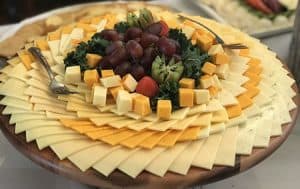
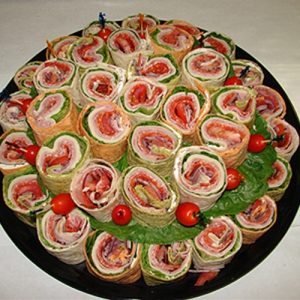
Beyond the bagels themselves, a proper catering spread typically includes a variety of bagels, bialys, and flagels arranged in a basket, a platter of homemade cream cheeses — often four or more flavors — along with butter, fruit trays, pastries, and hot items like breakfast sandwiches and coffee service. That’s a full breakfast setup, not a snack tray, and it takes real coordination to pull off cleanly.
For larger events — backyard gatherings, company picnics, family celebrations — the scope can expand considerably. Full BBQ catering, for example, is a different operation entirely: it involves bringing equipment, staff, and everything needed to cook on-site. Grills, gas, utensils, serving dishes, condiments — the works. When that’s done right, it removes the entire logistical burden from the host and delivers a genuinely impressive spread.
The key thing to understand is that not every bagel shop can do this. We’ve built the infrastructure for it — reliable staff, early-morning operations, and the experience to handle volume without sacrificing quality. That combination is rarer than it sounds, and it’s worth asking about directly before you commit to a vendor for any event of size.
Where to Find Authentic New York Style Bagels in Nassau County
Real New York style bagels aren’t complicated to understand once you know what goes into them — but they do require a baker who’s willing to do every step the right way, every single day. The kettle cooking, the fermentation, the hand-rolling, the timing. None of it is optional if the end result is going to be what it’s supposed to be.
If you’re in Nassau County and you’ve been settling for less without quite knowing why, now you know what to look for. And if you need bagels for an event — whether that’s a corporate breakfast in Syosset, a family gathering on the South Shore, or anything in between — the standard should be the same: fresh, properly made, and delivered by a team that knows what they’re doing.
We’re here for exactly that. Reach out and let us know what you need.